
Business Case for Creators Strike: No More Volunteering for IG, YouTube or Any Socials
 Alright, we have to talk about the changes happening on YouTube (YT) and what we (viewers and content creators) are going to do about it.As someone who watches 10H+ a week of content on YouTube and Patreon, I’ve noticed that videos are getting longer, less refined, and more repetitive. Not quite streaming territory, but not documentaries either. To clarify, I’m not discussing focused content like visual podcasts (Creative Pep Talk), tutorials (Lynsay Green Art), or single-cam think pieces on various topics (Tenicka Boyd). I’m referring to the more traditional vlog format, which previously ran a tight 15-20mins, but is now exceeding 50+mins in length.

When a vlog is longer than 20 mins, it enters into commercial broadcasting territory.
Traditional broadcasting television formats for different types of content are:
Technically, a vlog can fall under Documentary-Anthology content, which can be feature-length. But under this category, the content produced follows a focused narrative method of storytelling, which we can address in future articles, just not this one. I’ve watched a vlogger kitchen sink a video with filler content, rambling about nothing, wandering around their home, then switching to sponsored content like it was The Truman Show – all within a 75min video. The video could have been a blog post. Another creator griped about her Ex in damning detail for 43 mins, while the tap was running fresh water down the bathroom drain. #EffThePlanet. I have since unfollowed each of these creators because their strategy is transparent: Longer vlogs = more watch time from their existing subscribers. This is bad math. Many vloggers have adopted a ‘Daddy, watch me twirl!’ approach to content (RIP Leslie Jordan) as if we are in a caretaker-child relationship, instead of a creator-customer one. It’s the FaceTime format where the viewer is on mute, watching in silence, unable to respond to what’s happening other than posting a single comment. These types of vlogs have no chapters, no editing, false authenticity, and nothing happens. On top of that, YouTube is sliding in 10 gambling ads over the course of a one-hour video. Uhhh, absolutely not. I did not consent to this mess.
As a viewer, I have to set a boundary with content creators.
As shocking as this may sound, I can only give a max of 20-mins of my time at 1.5x speed for each long-form vlog. I’m not expecting more out of a vlogger, because they’re not broadcasting professionals (screenwriters, actors, etc.). I wholly support and understand that these creators need to be paid, AND I am not entitled to their free content whatsoever. But individual vloggers are not entitled to an hour or more of my time for free either. Last year, I could support 5 different YouTubers in that hour, but now it’s down to one. It’s the quickest path to burnout for all parties involved, especially if we’re not being compensated. NOTE: If you want to explore the damaging effects this type of content has on our brains, I recommend Rachel Barr’s How To Make Your Brain Your Best Friend (specifically all of Chapter 7: Me, Myself & Wi-Fi).
Ok, let’s address the real issue and break this problem down together, so we have a better understanding of what’s happening and what steps we have to take to rectify the situation. Because it appears that we are being conned into volunteer service by a for-profit company. We’re not in the age of Marshall McLuhan’s The Medium is the message. We’ve entered the era of The Platform is the problem.
What is the Ask?
YouTube will increase watch time hours from 4000 to 8000 for your channel to be eligible for monetization. Translation: YT is mandating an increase in your channel’s viewership before you can be compensated for your work.
The Problem(s)?
There are many pain points with this policy change, both explicit and latent: Explicit pain points:
- Zero transparency with the reasoning behind the policy change.
- The channel watch time has doubled along with other stipulations, making it more difficult for a channel to monetize or maintain monetization through the partner-program.
- YT is not providing solutions on how a channel can achieve monetization, just leaving it up to interpretation by the channel owner.
Latent pain points:
- Platform monetization and profit share. Ads can be placed on unmonetized content without creators’ permission.
- Content creators have no say on the length of ads placed on video – eg. 8 min ads can be placed on a 15 min video. They cannot control exactly which ad plays or if an ad will trigger at a specific moment for every viewer.
- YouTube is not required to release the data on how many ads they’ve placed on your videos (whether you’re in a monetization program or not).
- For advertisers, YouTube does not have to inform you to whom your ads were shown.
- Advertisers will not know if their content will be shown to their core audience or pre-existing customers.
- No security for your content against AI use. A dark UX process is used for creators to opt out of AI.
In the real world, a shop owner would never allow someone to plaster an ad that covered their storefront for FREE. With the new changes in policy, YouTube is not incentivized to show partner-program monetized content. By changing the partner-program eligibility requirements, they will make more money from unmonetized channels than from partner-program channels.
Where YouTube’s strategy goes wrong
There’s a conflict of interest in what is good for the public versus what’s good for the company. YouTube’s goal is to have people spend more of their time on their platform. Instead of increasing or improving monetization outputs, they are making it more difficult to meet eligibility requirements for incentivized programs. YT already has the content creator laboring for free, so why not get them to do more gratis work? YT is not improving their product in a way that benefits the creator. Once monetized, determining your channel’s RPM/CPM is complicated.3 Example: Depending on what tier your country falls under, what niche your vlog is in (usually entertainment), and how many views (not total watch time) each video has —> a 75-min US lifestyle vlog with 100,000 views in a month will generate between $350-$900.45 More revenue could be generated from 3rd party sources – such as brand deals, product placement, etc. So demanding an increase in watch time hours is not an accelerant to monetization and breaks the contract between the creator and the platform. Also, there are fewer protections for you as a creator and for your work when you upload to YouTube. The creator has to ask, ‘What am I getting out of this?’. YouTube has chosen to optimize for its own interest (ie. making more money) rather than build a better experience for its viewers & creators. And they might be committing a type of fraud in doing so… allegedly.
The Fraud Triangle
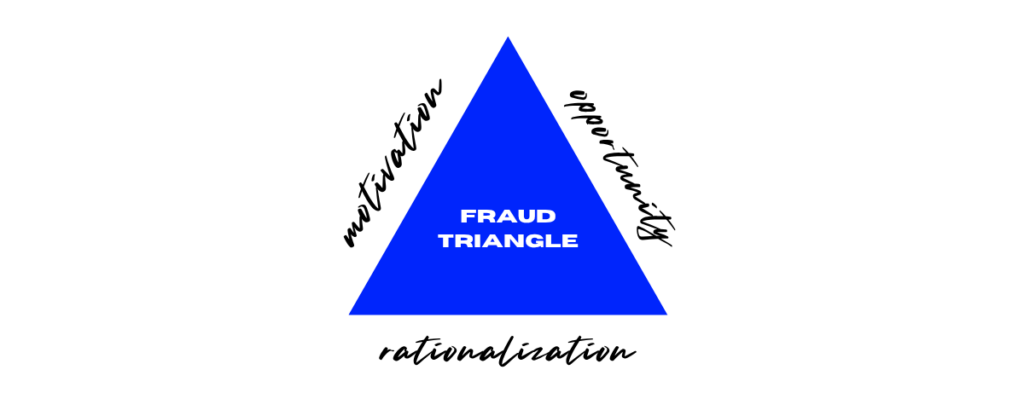
Edwin Sutherland, Donald R. Cressey, and Steve Albrecht coined the term The Fraud Triangle (TFT) to model conditions that lead to a higher risk of fraud.
‘The Fraud Triangle states that individuals are motivated to commit fraud when three elements come together: (1) some kind of perceived [financial] pressure [or incentives], (2) some perceived opportunity, and (3) some way to rationalize the fraud as not being inconsistent with one’s values.’6
Someone much smarter than I can go into more detail about TFT and how it’s used to investigate whether fraud is present. We do have precedents of Big Tech companies committing fraud in the past, with multiple open lawsuits, tribunals, and court rulings on the conflicting business practices and federal policy violations of these companies. Sarah Wynn-Williams (Big Tech whistleblower) writes about what types of infractions these companies knowingly commit for profit in her book Careless People.
Heavy on the Subsidies
Lest we not forget that these Big Tech companies are heavily subsidized by government programs (read here, here, and here) even though they are working under a for-profit business model. Big Tech was not required to pay tax on their earnings/ funding if their revenue was generated from outside of their home countries. This literally started the tariff wars. Big Tech receives financial support from investors both public (shareholders / governments) and private (the rest of us). So they are receiving money from multiple sources, yet go unmonitored in its distribution. Why is that? Because YouTube toes the line between being designated as a Big Tech company and a Broadcasting Company (BC).
Are you Big Tech or a Broadcaster?
BCs follow different government regulations and have external ombudsmen (like the FCC, Nielsen, & Unions) who hold them publicly accountable. Ombudsmen track certain metrics for compensation outside of the company itself. When an actor or writer talks about royalties from a TV show they worked on, it’s organizations like Nielson/ FCC that tell broadcasters who gets how much and when. While YouTube has achieved the privileges of a BC, they answer to no one. If we read the fine print, we understand that creators-viewers are not in a symbiotic relationship with YouTube, and it’s dangerous for an organization to lose empathy for their customers. But for some of us, these platforms are our bread and butter, so we need to pivot quickly…
Part 2 of A Business Case for a Creators Strike continues next week, where we discuss 5-star ideas on how to stick it to the digital Man.

Summary
You’ve made it to the end of Part 1 of this manifesto. It’s chock-full of info, so let summarize what’s happening.
- With the increase in a channel’s watch time hours to be eligible for monetization, YouTube is incentivizing content creators (vloggers) to overextend themselves.
- Creators are misinterpreting these new policies by posting excessively lengthy content to retain viewership.
- Viewers/subscribers are inheriting the burden of the new policies by default.
- Zero transparency about the reasoning behind the policy change.
- Advertisers will not know if their content will be shown to their core audience or pre-existing customers.
- YouTube is already heavily subsidized by governments and investors, but is not monitored by an ombudsman for accountability.
- Possibly committing fraud with new monetization policies.
- YT is not providing solutions on how a channel can achieve monetization.
- No real improvements to the platform itself.
… power to the people. Charles, Malene Creative Technologist No AI used to create this content.